Agadir in 1930
Archival views by photographer Emile Bouvier, taken in 1930. These are real photographs, not AI-generated images.
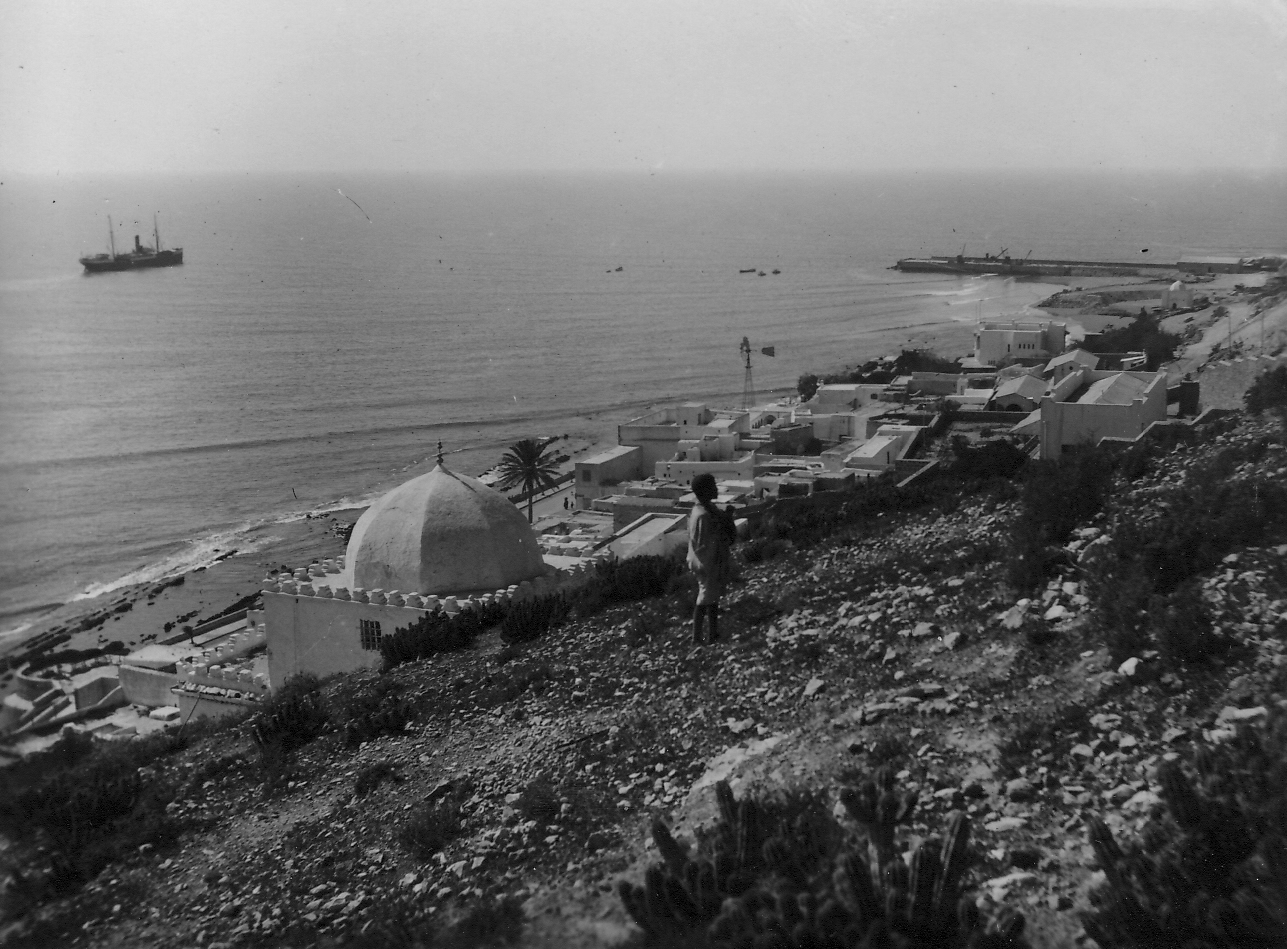
Founti and the port under construction, 1930.
Photograph by Émile Bouvier, family archive. Wikimedia Commons file · CC BY-SA 3.0.
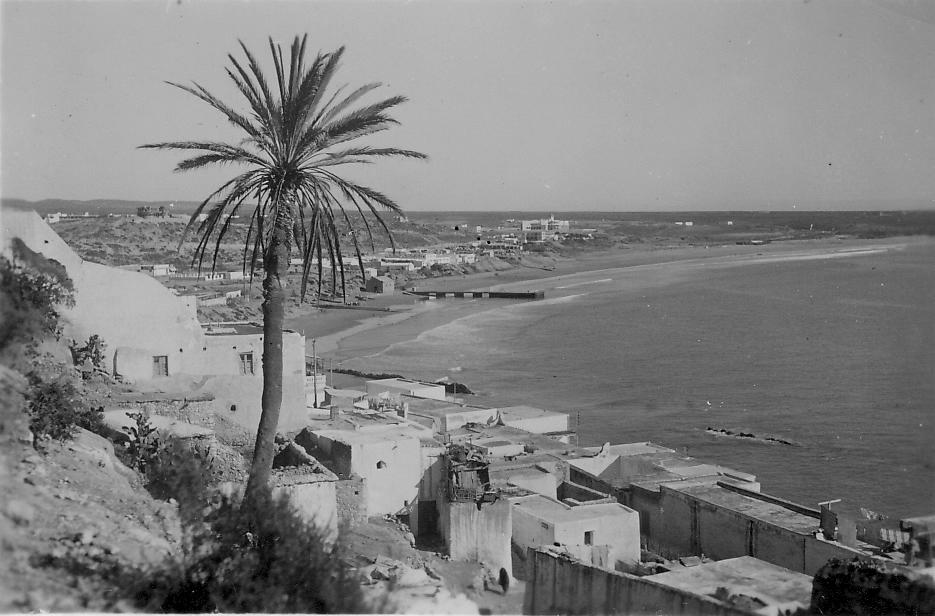
The old Founti quarter and beach, 1930.
Photograph by Émile Bouvier, personal archive. Wikimedia Commons file · CC BY-SA 3.0.
An Amazigh name, older than the modern city
Agadir is an Amazigh word commonly used for a fortified storehouse or communal granary. It points to deeper local histories in the Souss; the written record for this port becomes clearer in the early modern period. The word alone cannot tell us when this exact settlement began.
1505–1541: Santa Cruz do Cabo de Gué
A coastal fort and trading post called Santa Cruz do Cabo de Gué is commonly dated to 1505 and associated with the Portuguese merchant João Lopes de Sequeira. The Portuguese Crown acquired and enlarged the fort in 1513. Local resistance and competition around Atlantic and trans-Saharan trade shaped the next decades. Saadian forces led by Mohammed Ech Cheikh took the settlement in 1541 after a siege.
A port on shifting trade routes
Under the Saadians, Agadir became a key outlet for Souss sugar and wider Saharan caravan trade. A hilltop Kasbah was built in 1572. An earthquake damaged the port in 1731; after repairs, Sultan Sidi Mohammed ben Abdallah shifted maritime commerce toward Mogador (now Essaouira) in 1764–65 and Agadir’s port was closed. The port’s fortunes revived in the late nineteenth and early twentieth centuries.
1911–1914: a diplomatic crisis and a modern port
In 1911, Germany sent the gunboat SMS Panther to Agadir during its confrontation with France over Morocco—the Agadir Crisis. Morocco became a French protectorate in 1912, and French troops occupied Agadir in 1913. Work on a modern port began in 1914, expanding the city’s role in trade and fishing.
1956–1960: independence and a growing port city
Morocco regained independence in 1956. Agadir’s modern port, fishing and trade contributed to the city’s growth. The City of Agadir reports a pre-earthquake population of about 45,000; historic districts including Talborjt and Founti remained part of the city when disaster struck.
29 February 1960: a city struck
At about 11 p.m. on 29 February 1960, an earthquake lasting roughly 15 seconds devastated Agadir. Old Talborjt and the Kasbah were among the worst-hit districts. Reports differ in magnitude and death toll; reliable summaries commonly put the number of people killed at about 12,000–15,000. The disaster became a turning point in the city’s history.
Rebuilding south of the old city
Morocco chose to rebuild Agadir rather than abandon it. The new city grew south of the devastated centre, with a new street plan and modern construction. As homes, services and the port returned, the souk was re-established at Amsernat. Today’s market links everyday trade to this post-earthquake rebuilding.
El Had and the market’s living history
Visit Agadir explains that “El Had” recalls the Sunday market once held in old Talborjt, and that the present Souk El Had was established in Amsernat after the earthquake. It is not a preserved relic: it is a working neighbourhood market whose story belongs to the rebuilt city.
Watch the market in motion
These creator-made walks offer a sense of the market’s scale and everyday atmosphere. The footage is dated; it is not live guidance on hours, prices or access.
Souk El Had, Agadir — virtual tour (4K, 60 fps)
A 4K, 60 fps virtual tour of the market, uploaded in March 2022.
Walks and Adventures · uploaded March 2022 · 4K, 60 fps · 29:24 · Watch on YouTube
Virtual Tour of Souk El Had Agadir — 4K, 60 fps
A later 4K, 60 fps virtual walk through a busy market day, published in November 2025.
Walking Tours 4you · published November 2025 · 4K, 60 fps · 1:10:31 · Watch on YouTube
The YouTube player loads only when you choose “Load video”. After it loads, YouTube may receive device and connection data under its own privacy terms.